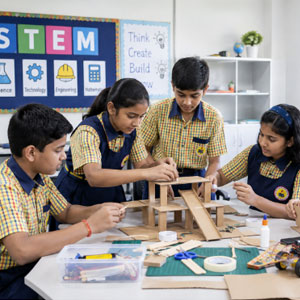
 STEM education helps students understand how science, technology, engineering and mathematics relate to everyday life. It allows children to explore ideas, carry out experiments and learn through practical activities. STEM learning helps students use what they learn in class to solve practical challenges and understand situations they encounter in daily life.
It also helps them improve their reasoning, think creatively, cooperate with others and approach challenges with confidence. Simple activities designed for their age can spark curiosity and support their learning as they progress through school.
Foster International School values learning approaches that help students gain knowledge, explore new ideas and apply what they learn through practical activities.
What Are the Four Main Areas of STEM Education?
Each STEM subject helps students develop different skills. When these subjects are connected, students can explore ideas and understand how classroom learning applies to real situations.
1. Science
Science helps students learn about living things, materials, energy and the natural world. Through observation and experiments, children can explore why things happen and how different processes work.
For example, students can place ice in different locations and observe how quickly it melts. They can record their findings and learn how temperature affects changes in materials.
2. Technology
Technology helps students understand how digital tools can support their learning and make daily activities easier to manage. Depending on their age, they may use educational apps, try basic coding or explore how simple digital devices work.
Schools can also use age-appropriate educational programmes to help students explore digital tools and develop practical technology skills.
3. Engineering
Engineering helps students plan, design, build and test solutions to practical problems. They can create a model bridge using paper, build a cardboard storage box or make a simple structure using reusable materials.
Through these activities, students learn to select suitable materials, test their designs and make changes when needed. They also understand how planning and testing can help turn an idea into a useful solution.
4. Mathematics
Mathematics helps students understand numbers, measurements, shapes, patterns and data. In STEM activities, students use these skills to explore questions and solve everyday problems.
For example, students can measure the height of different plants, record their measurements and compare the results. This activity helps them practise measurement, organise information and understand how mathematics is used in real-life situations.
Why Is STEM Education Important for School Students?
STEM education helps students use their knowledge, explore different ways to solve problems and develop useful learning skills. It also gives them opportunities to learn through practice rather than relying only on theory.
1. Strengthens Independent Thinking
STEM activities encourage students to ask questions, examine information and look for evidence before deciding whether an answer is correct. They can compare observations, identify patterns and explain what they think has happened.
This helps children work through problems independently and explain the reasons behind their answers.
2. Teaches Students to Learn from Mistakes
An experiment or design may not work as expected the first time. Students can look at what happened, identify what needs to change and try again.
This teaches them that mistakes can help them learn. They also understand that finding a suitable solution may require several attempts.
3. Encourages Original Ideas
Some STEM activities allow students to find different ways to complete the same task. For example, they may create a useful object from recycled packaging or design a model to solve a problem in their classroom.
These tasks encourage children to think creatively, explore new ideas and make their own choices with confidence.
4. Develops Teamwork and Listening Skills
Group projects give students opportunities to share ideas, listen to different opinions and work together to complete a task.
They learn to respect others’ views, explain their own ideas and share responsibilities. Working as a team also helps them understand how cooperation can make problem-solving easier.
5. Helps Students Understand Information
Many STEM activities involve observing changes, measuring results and comparing information. Students can use their findings to explain what they have learnt.
This gives them practice in working with facts, numbers and evidence. It also encourages them to share their thoughts in a clear and simple way.
6. Supports Future Academic and Career Choices
STEM introduces children to a range of subjects and career options, helping them explore their interests and future goals. These include engineering, computer science, healthcare, environmental studies, architecture and scientific research.
Early exposure helps students discover their interests and learn about future study options without having to choose a career too soon.
How Can Schools Introduce STEM Education in the Classroom?
Schools can include STEM learning in regular lessons through activities that match the curriculum and students’ learning levels. Every activity should have a specific learning goal and make the topic easier for students to understand.
STEM activities allow students to put their classroom learning into practice and understand how it connects to everyday life.
1. Use Observation-Based Science Tasks
Teachers can ask students to observe how seeds grow, compare different materials or record daily weather conditions.
Students can keep a simple observation diary and discuss the changes they notice over time. This helps them practise recording information, comparing results and explaining their findings.
2. Introduce Coding Through Simple Instructions
Young children can put picture cards in the correct order or follow simple steps to move an object from one spot to another. Older students can progress to basic coding tasks and simple digital projects.
Teachers can use age-appropriate coding games, beginner-friendly coding platforms and simple digital activities to help students understand sequences, instructions and basic problem-solving.
3. Organise Design Challenges
Teachers can give students practical design tasks, such as making a paper windmill, creating a lunch-box holder from reusable materials or building a small model of a community.
Each challenge should have a clear purpose and simple rules. For example, students may need to build a strong structure using a limited number of materials. They can test their designs, make improvements and explain why they chose a particular approach.
4. Explore Data Through Classroom Surveys
Students can carry out a short survey about their reading habits, favourite books or ways of travelling to school. They can organise their answers in tables and charts, compare the results and explain what they have learnt.
This task allows students to work with data and present their findings in a clear way.
5. Create Environmental Projects
Schools can organise projects about waste reduction, water use, energy conservation and the natural environment.
For example, students can record how much paper their class uses in a week and suggest ways to reduce waste. This activity combines data collection with environmental awareness and practical problem-solving.
Practical STEM Learning in Schools
Schools can make learning more engaging through activities that encourage students to ask questions, explore ideas and apply classroom knowledge. At
Foster International School, we encourage students to learn through practical activities and exploration.
Examples of classroom STEM activities include simple science experiments, cardboard building challenges, basic coding exercises and classroom surveys. Teachers can adapt these activities to students’ ages, curriculum requirements and available resources.
What Is the Role of Teachers in STEM Education?
Teachers help students understand why an activity is important and how it connects with classroom learning. They guide children while giving them opportunities to explore ideas and find answers independently.
Teachers can make STEM lessons more effective by:
- Setting clear goals: Explain what students should learn from each activity.
- Asking helpful questions: Encourage children to describe what they notice, share their observations and consider different answers.
- Choosing suitable resources: Select safe materials, tools and activities that suit students’ ages, abilities and learning goals.
- Giving useful feedback: Help students understand what they did well, identify areas for improvement and consider how they can develop their work further.
- Checking learning: Review students’ explanations, observations and project work instead of judging only the final result.
Teachers can benefit from academic guidance, suitable learning resources and training to plan effective STEM activities for students.
How Is STEM Education Relevant to Schools in India?
STEM education in India supports the wider aim of helping students understand key ideas, develop practical skills and apply their knowledge.
The
National Education Policy (NEP) 2020 supports learning through experience, critical thinking and connections between subjects. STEM activities can support these aims when they are planned according to curriculum requirements and students’ learning needs.
Schools can introduce STEM step by step. Younger children can explore sorting, shapes, building blocks and nature. Primary school students can try simple experiments and measurement tasks. Older students can explore coding, robotics, data analysis and more detailed design projects.
Each school may use different activities and learning materials based on its needs and resources. Effective STEM learning needs trained teachers, activities suited to students’ ages, clear learning goals and time for children to think about what they have learnt.
How Can Parents Support STEM Learning at Home?
Parents can help children explore STEM through simple activities at home. Children can learn beyond the classroom by asking questions, exploring new activities and observing the world around them.
- Involve children in cooking: Let children measure ingredients, compare quantities and observe how ingredients change during cooking, with adult supervision.
- Explore nature together: Observe plants, leaves, insects and clouds with children. Ask them to describe what they see and discuss why these things may change.
- Encourage building activities: Use blocks or recycled cardboard to create models and explore shapes and balance.
- Discuss everyday technology: Talk about how household appliances work and how people use them to complete tasks.
- Ask children to explain their ideas:Use questions such as, “What do you think will happen?” or “How could we test that?”
The aim is to help children feel comfortable asking questions, exploring ideas and explaining what they observe. Activities should be enjoyable and suitable for each child’s age.
Frequently Asked Questions About STEM Education